Why Kochi Is an Interesting Location for Aviation Management Studies
Introduction
The decision to study aviation should begin with a clear understanding of the student’s intended career direction. Students considering aviation education in Kochi want to understand what factors make the location and programme choice worth evaluating. aviation management studies in Kochi is a useful search topic because students and parents often want practical information before committing time and money to a degree.
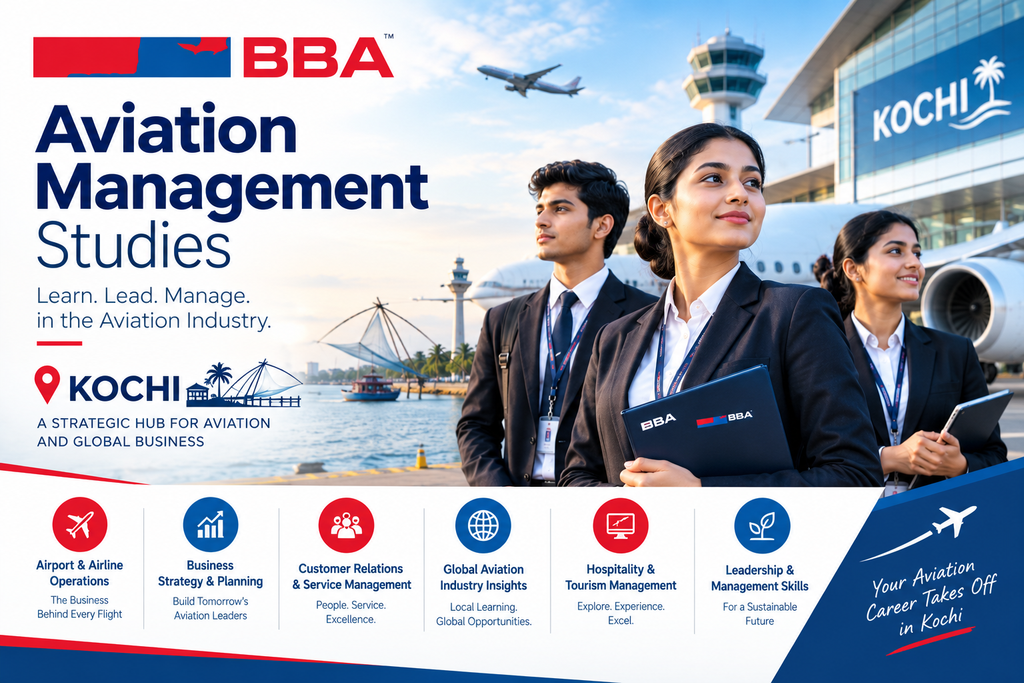
Why Location Can Matter
Location can affect access to educational resources, industry exposure, commuting convenience and opportunities for local networking. However, location alone should not determine the choice of institution.
Students should compare what each programme actually provides. A strong curriculum and useful practical learning are more important than choosing an institute simply because it is close to an airport.
The Role of a BBA Aviation Degree
A BBA Aviation programme can combine business education with aviation-focused learning. This can help students understand how management principles apply in an aviation environment. The exact balance depends on the institution, so the official curriculum should always be checked.
Who May Benefit From the Course?
The programme can appeal to students who enjoy business subjects, communication, travel, customer interaction, coordination or aviation operations. It may also suit learners who want an aviation-related career without pursuing pilot training.
Industry-Oriented Learning
Aviation education becomes more useful when students can connect theory with workplace situations. Practical activities, industry interaction and professional-skills training can help learners understand how airport and airline environments function.
Keywords Students Commonly Search
People researching this subject may also search for aviation education in Kochi, aviation courses in Kerala, BBA aviation Kochi and airport management studies. These searches reflect different stages of the decision-making process, from understanding the degree to comparing careers and institutions.
Making an Informed Decision
Students should compare the actual programme structure rather than relying on a single advertisement. Check the qualification awarded, syllabus, duration, eligibility, practical training, additional certifications and career-support services.
What Students Should Understand Before Choosing the Course
Aviation education is broader than learning about aircraft. Airports and airlines depend on teams working across passenger services, operations, administration, customer support, commercial activities and other functions. A business-oriented aviation degree can therefore be relevant to students who are interested in the organisational side of the industry.
Students should begin by identifying the type of work they find interesting. Someone who enjoys interacting with passengers may be interested in customer-facing services. Another student may prefer administration, coordination or operational work. Understanding these preferences makes it easier to compare programmes.
It is also important to separate a course from a job guarantee. A degree can provide knowledge and skills, but employment depends on the student’s performance, experience, employer requirements and available vacancies. Students should therefore focus on the quality of education and career preparation rather than choosing a programme solely because of a promised job title.
Skills That Can Make a Difference
Communication is one of the most useful skills for aviation-related careers. Students should practise speaking clearly, writing professional emails and interacting politely with customers and colleagues. Teamwork is equally important because airport and airline activities require coordination between departments.
Computer literacy can also be useful. Many aviation functions involve digital systems, records, reservations, communication and reporting. Students who are comfortable learning new software can adapt more easily to technology-driven workplaces.
Professional presentation matters as well. Punctuality, grooming, confidence, problem solving and a willingness to learn can influence how a graduate performs in interviews and at work. These qualities can be developed during college through presentations, group projects, practical activities and interview preparation.
Questions to Ask Before Admission
Before paying fees, students should ask for a detailed syllabus and understand which organisation awards the degree. They should also ask about the duration, admission requirements, practical activities, industry certifications and career-support services.
If an institution mentions airport familiarisation, internships, software training or industry exposure, students should ask what those activities actually involve. Clear information helps students compare programmes fairly.
It is also useful to understand the difference between the academic qualification and additional certificates. A degree and an industry certification may serve different purposes. Students should know who issues each certificate and what learning or assessment is associated with it.
Building a Career Beyond Graduation
Aviation careers can develop gradually. Students can use their degree period to build a CV, improve communication, participate in practical activities and learn about different aviation functions. After graduation, they may continue with specialised training or gain experience in entry-level positions.
The aviation sector includes passenger and freight activity and depends on a wide network of operational and business functions. The International Energy Agency notes that air transport demand has grown substantially since 2000, illustrating the continuing importance of aviation as a transport sector. citeturn0search0
Final Thoughts
A BBA Aviation pathway can be considered by students who want a combination of business education and aviation-related learning. The most important step is to compare the actual programme rather than relying only on its title.
Students should check eligibility, curriculum, practical exposure, certifications, facilities and career guidance before making a decision. With a clear career goal and consistent development of communication, digital and professional skills, students can make better use of their aviation education.
FAQs
Why consider aviation studies in Kochi?
Students may value the city’s connectivity and aviation ecosystem, but programme quality should remain the priority.
Are aviation courses available in Kerala?
Yes, students can find aviation-related education options in Kerala, with eligibility and programme structures varying by institution.
What should I compare in Kochi?
Compare curriculum, qualification, practical exposure, facilities, certifications and career support.
Does location guarantee better career opportunities?
No. Skills, qualifications and employer requirements remain important.
Making Location Work for Your Education
Studying in Kochi can be convenient for students from Kerala, but the city itself should not be the only reason for selecting a programme. Students should consider commuting, campus facilities, learning resources and opportunities for industry interaction. They can also use the location as an opportunity to learn more about aviation as a sector. Attending career sessions, speaking with trainers and following aviation news can help students understand the industry beyond the classroom.